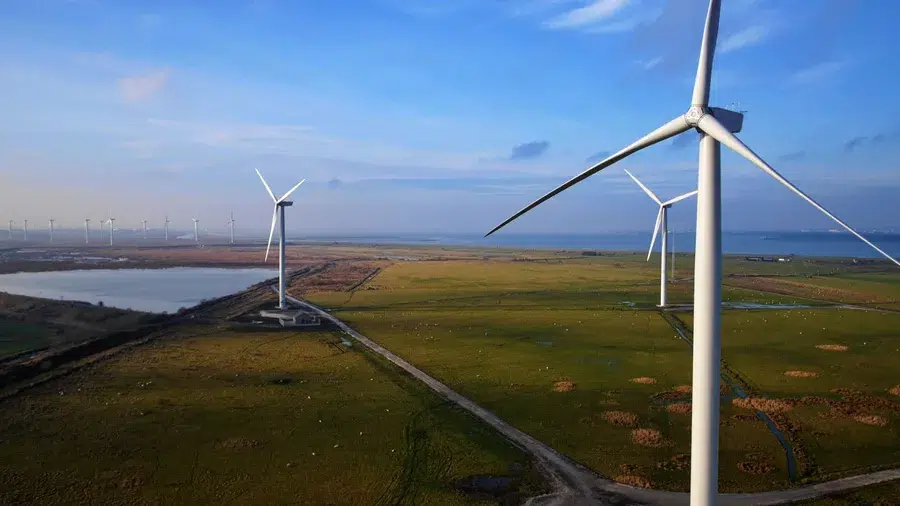
With onshore wind farm construction timelines, the actual construction phase can be finished quite quickly. A small 10 MW onshore site can typically go from first concrete pours for foundations, to spinning blades in roughly two months, while a 50 MW project will often need up to six months of work on the ground before it’s putting regular energy out.
The actual answer of how long it takes to get one up and running is less tidy, because the “build” sits inside a much bigger process: scoping, surveys, government consent, grid, finance, procurement, and only then construction and commissioning.
Add those up, and the headline timeline runs from about five years (everything lined up, few surprises) to eight-plus years (more typical), with outliers that drift further when grid or planning snags start to pile up.
1. Site finding & wind resource (6-18 months)
Prospective developers will first need to identify windy ground with viable access, agreeable landowners, and somewhere to plug in. Early studies look at wind yield, available grid capacity, roads for abnormal loads, aviation/radar constraints, ecology constraints, and noise issues. This stage ends when the project looks viable enough to spend serious money on design and surveys.
2. Scoping, surveys & design (12-24 months)
Expect a year of ecology and ornithology across seasons, noise and shadow-flicker work, landscape assessments, and iterative layouts to avoid sensitive areas. In parallel, the team refines turbine count, hub height, foundations, access tracks, and substation location. In the UK government’s own lifecycle, scoping typically occupies the first two years of the journey.
3. Planning & consent (12-54 months)
This is the longest part of the process. Pre-application, statutory consultation, application, examination (where applicable), and decision can move quickly, or at a complete crawl. The new Onshore Wind Taskforce strategy maps three illustrative end-to-end pathways: a short timeline of 5 years, a medium of 8.5 years, and a long of 11.5 years.
Within those, the planning/consent stage alone can consume up to 4.5 years before a final investment decision is taken. (This will obviously vary by size and nation: local planning for smaller schemes, the Nationally Significant Infrastructure Projects regime returning for big English projects.)
4. Grid connection & commercial close (variable)
Even consented projects can be stranded by grid queues. In parts of Great Britain, connection dates for distribution have stretched far beyond construction time itself; it can be so protracted that some developers have been offered dates a decade or more out. Reforms now underway aim to reorder the queue around “readiness” tests and bring connection dates forward, but the grid remains the biggest external delay factor in a UK wind farm schedule.
5. Procurement & pre-construction (6-12 months)
Once consent and connection are in place (or at least there is a high probability it will be viable), the project locks turbine supply, balance-of-plant contractors, and finalises finance. Detailed design is locked in place, construction method statements are written, and abnormal-load routes are agreed with highway authorities where necessary.
6. Construction & installation (2-9 months on site)
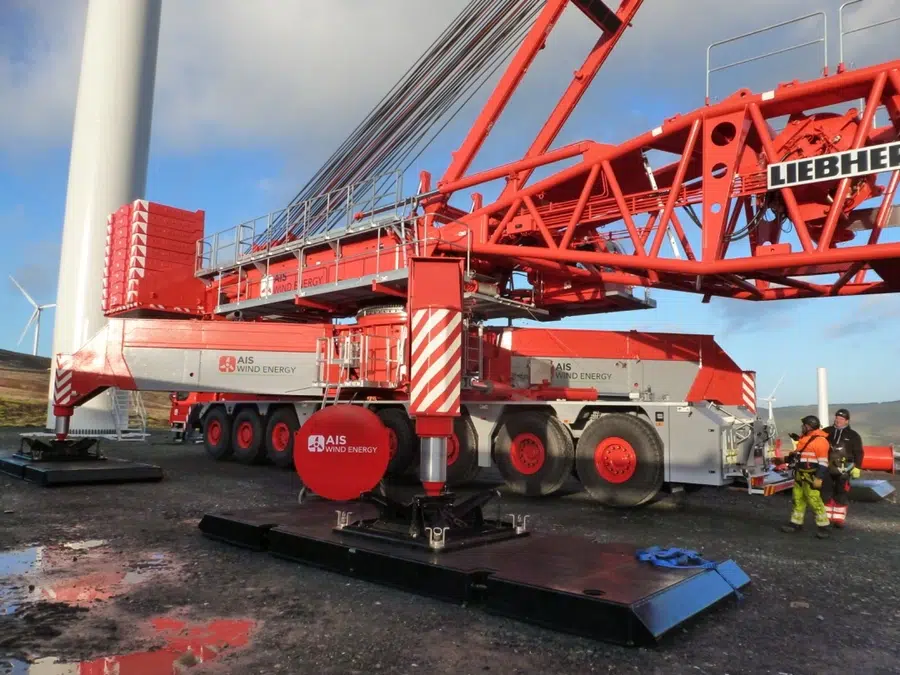
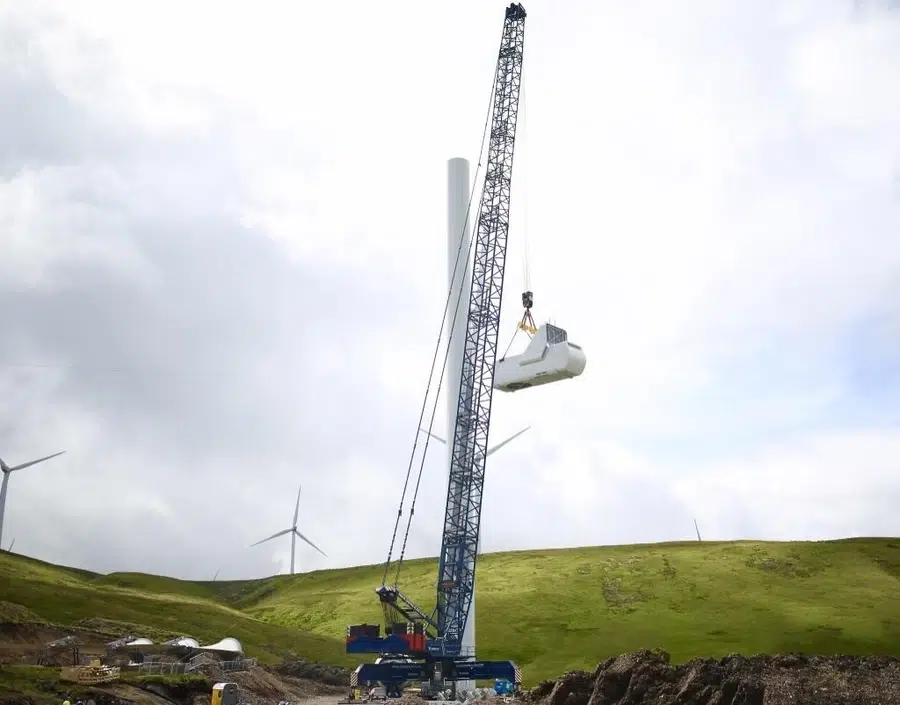
Civil works – tracks, crane pads, foundations, ducting, substation – lead the way. Turbines arrive in sections; each machine is typically erected in about a week, if weather and other logistical components all cooperate. Larger sites parallelise erection to stay on the pre-agreed timeline. After mechanical completion, then electrical works, protection systems, and SCADA can all be finished and tested.
7. Commissioning, testing & handover (1-3 months)
Before the initial power up, teams need to prove the safety chain, protection settings, and communications. Then come staged energisations, test energy, performance runs, and finally commercial operation.
What the “build time” really means
When people ask how long it takes to build a wind farm, they usually mean the visible part – cranes, blades, and nacelles. That part is genuinely fast by infrastructure standards. At AIS Wind Energy, we’re able to put a clear number to it: 8-10 weeks for a ~10 MW site; up to six months for ~50 MW, depending on terrain, weather, and logistics.
WindEurope and national industry guides echo the same order of magnitude. The catch is that physical construction sits at the end of a multi-year runway, and the earlier steps – especially planning, radar/aviation mitigation, and grid – set the actual pace of the overarching project.
Why UK timelines vary so much
There are a few reasons why timelines in the UK can vary so much.
Planning route and location
Scotland has historically moved faster than England for medium-to-large onshore sites; rules and capacity at local planning authorities matter. England is changing for the better, however; policy updates in 2023 loosened the tightest restrictions, and in July 2025, the government set out a full onshore strategy to streamline surveys, decisions and appeals that aims to speed things up.
Projects still need to clear environmental and aviation constraints, but the direction that things are headed in is toward quicker, more predictable application approval.
Grid queuing
As noted above, connection dates can absolutely dwarf construction time. A 25-turbine farm will likely be physically buildable in under a year, but will be unable to export until reinforcement works land – sometimes a phase that’ll be ten years out in more congested regions.
The NESO’s 2025 Connections Reform is designed to reorder the queue and kick out “placeholder” projects that aren’t ready, bringing live schemes forward. Developers who hit the new readiness criteria should see better dates, but it will take time to flush through.
Supply chain and seasonal windows
Issues such as crane availability, concrete pours in winter, environmental constraints (e.g., bird breeding seasons), and abnormal-load escorts all have the potential to negatively impact the overall schedule. None add years on their own, but together, they explain why a supposedly two-month mechanical build often stretched out by weeks or even months.
If you’re asking in the sense of cranes on site, the answer is likely months, not years. But if you’re asking how long until it’s linked up to the grid and bringing in cash, the UK’s real-world answer is it depends – mostly on planning permissions and grid connectivity. With policy changes now aimed at streamlining planning and re-ordering connections, the government’s own roadmap says five years is achievable, ~8.5 years is common, and ~11.5 years still happens for complex schemes.