The UK’s wind energy sector is more varied than you might expect. From massive offshore farms generating energy for cities, to small turbines powering remote farms or eco-homes, the types of wind turbines used in this country differ quite a bit. Some are designed to squeeze every last watt out of strong coastal gusts, while others are built to keep ticking over, even in choppy, irregular wind.
So, what kinds of turbines are out there in the UK, and what sets them apart?
1. The Classic: Horizontal Axis Wind Turbines (HAWTs)
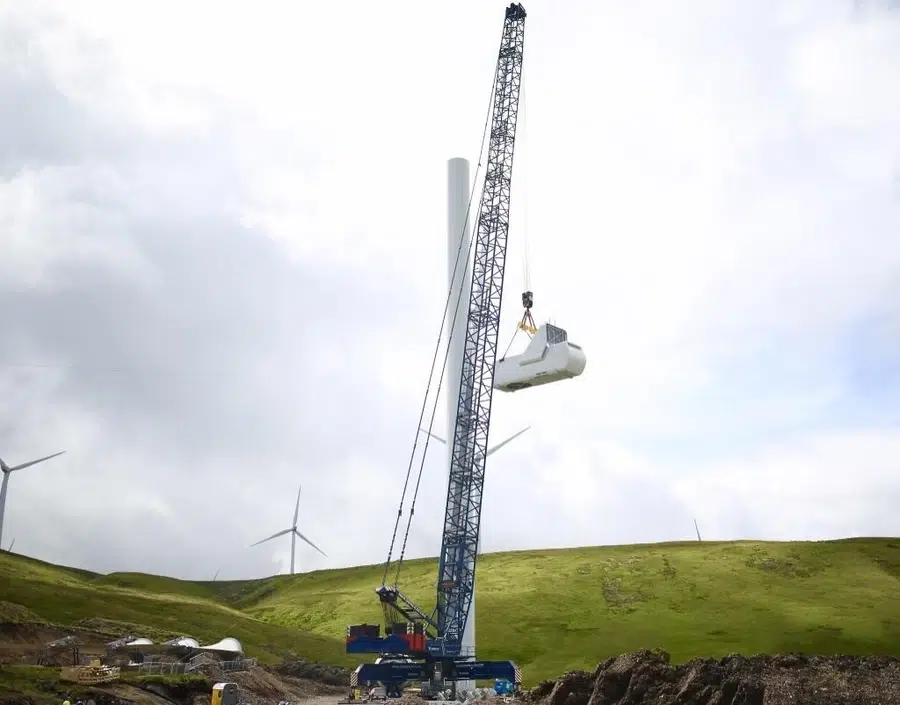
These are the ones you’ve likely seen, with three blades, spinning like a slow fan, mounted on a long tower. They’re technically called Horizontal Axis Wind Turbines, or HAWTs for short. This type is the go-to choice for large-scale generation, especially on wind farms.
The blades are fixed around a central rotor that spins on a horizontal axis, facing into the wind. A small motorised system usually helps keep the whole structure pointed the right way.
You’ll find these:
- In fields across Scotland, Wales, and the north of England
- In offshore wind farms, miles out to sea
- Occasionally on large commercial or industrial sites
Why people like them:
- They’re efficient, especially in steady winds
- The tech is well-developed and highly reliable
- Big turbines = big output, so fewer are needed for large projects
But they’re not small, and they’re not quiet. Which means planning approval and community support can be a challenge.
2. Going against the grain: Vertical Axis Wind Turbines (VAWTs)
These are a bit less well-known, and visually a bit more surprising. Vertical Axis Wind Turbines (VAWTs) look nothing like the classic design.
Instead of spinning like a fan, they rotate around a vertical pole. Some look like eggbeaters, or a bit like modernist sculptures. Because the blades spin vertically, these turbines don’t need to face into the wind at all – which makes them well-suited for gusty or irregular wind environments.
You’ll spot them:
- Occasionally on rooftops
- In some urban pilot projects
- On small-scale off-grid setups
Why they’re interesting:
- They work no matter which way the wind blows
- They can be mounted lower to the ground
- Some say they’re quieter, and safer for birds
That said, they’re still something of a niche product. They tend to generate less power than HAWTs, and the design hasn’t been commercialised on the same scale, at least so far.
3. Small wind turbines: For homes, farms, and smaller businesses
Not every turbine needs to power a town. Across the UK, a growing number of people are exploring small wind turbines to support their own electricity needs, especially in rural areas.
These systems might generate anything from a few hundred watts to 50 kilowatts. That could be enough to power a house, a workshop, or a small farm, often in combination with solar panels and battery storage.
Typical uses:
- Remote homes that aren’t connected to the grid
- Farms looking to offset rising energy bills
- Community-owned renewable energy schemes
What to keep in mind:
- You need a decent amount of wind for it to make financial sense
- Planning permission may apply depending on location and turbine height
- You’ll still need a backup, wind isn’t always predictable
These aren’t gimmicks, though. With the right conditions and equipment, small wind turbines can deliver real value over time.
4. Offshore turbines: The heavyweights
The UK leads the world when it comes to offshore wind, and these turbines are absolutely massive. Some stand over 200 metres tall, with blades longer than the wingspan of a jumbo jet.
Why go offshore? It’s pretty simple – wind speeds are faster and more consistent out at sea. There’s also less concern over noise or appearance, which means bigger turbines can be used without the same objections you’d find on land.
Main projects include:
- Hornsea Project (Yorkshire coast)
- Dogger Bank Wind Farm
- Moray East (Scotland)
Challenges include:
- Cost of offshore installations
- Maintenance is harder – you need boats, engineers, specialised equipment
- Weather can disrupt servicing and cause delays
But the payoff is huge. These farms generate a significant portion of the UK’s renewable electricity, and more are on the way.
5. Urban wind turbines: Still a work in progress
You might see the odd VAWT or compact turbine mounted on a roof in a city. While it’s a neat idea – turning wind into power in built-up areas – the results have been mixed.
Turbulence caused by buildings, limited airflow, and unpredictable gusts can make urban wind turbines less effective. Some projects have been scrapped altogether, after generating far less energy than expected.
Are they pointless though? Not necessarily. In the right location – with enough wind and a well-matched system – they can work. But it’s not the sure bet that offshore or rural wind offers.
6. Co-located and hybrid systems
In many cases, wind turbines don’t operate alone. You’ll often find them working alongside solar panels, battery storage, or even hydrogen generation systems. The goal is to create a well-balanced setup that can generate power in various weather conditions and store it for later use.
These kinds of systems are particularly common in:
- Off-grid rural homes
- Remote monitoring stations
- Eco-focused business sites
As battery technology improves, expect to see more hybrid wind systems popping up around the UK.
Which turbine is right for your needs?
There’s no single best turbine. It all depends on what you’re trying to achieve, where your site is, and what kind of wind you can rely on.
Got a windy coastal field and a big budget? Large horizontal turbines (onshore or offshore) might be perfect. Live off-grid with decent breeze but limited space? A small VAWT could do the job. Do you want to reduce bills but stay connected to the grid? A modest HAWT system paired with solar could make sense.
If you’re just curious about how Britain powers itself these days, you’ll find answers in fields, at sea, and even – very occasionally – above rooftops.
Wind energy isn’t a monolithic enterprise. It’s a network of systems, technologies, and local adaptations. Despite making it more difficult to understand, that diversity is exactly why it’s working so well.